
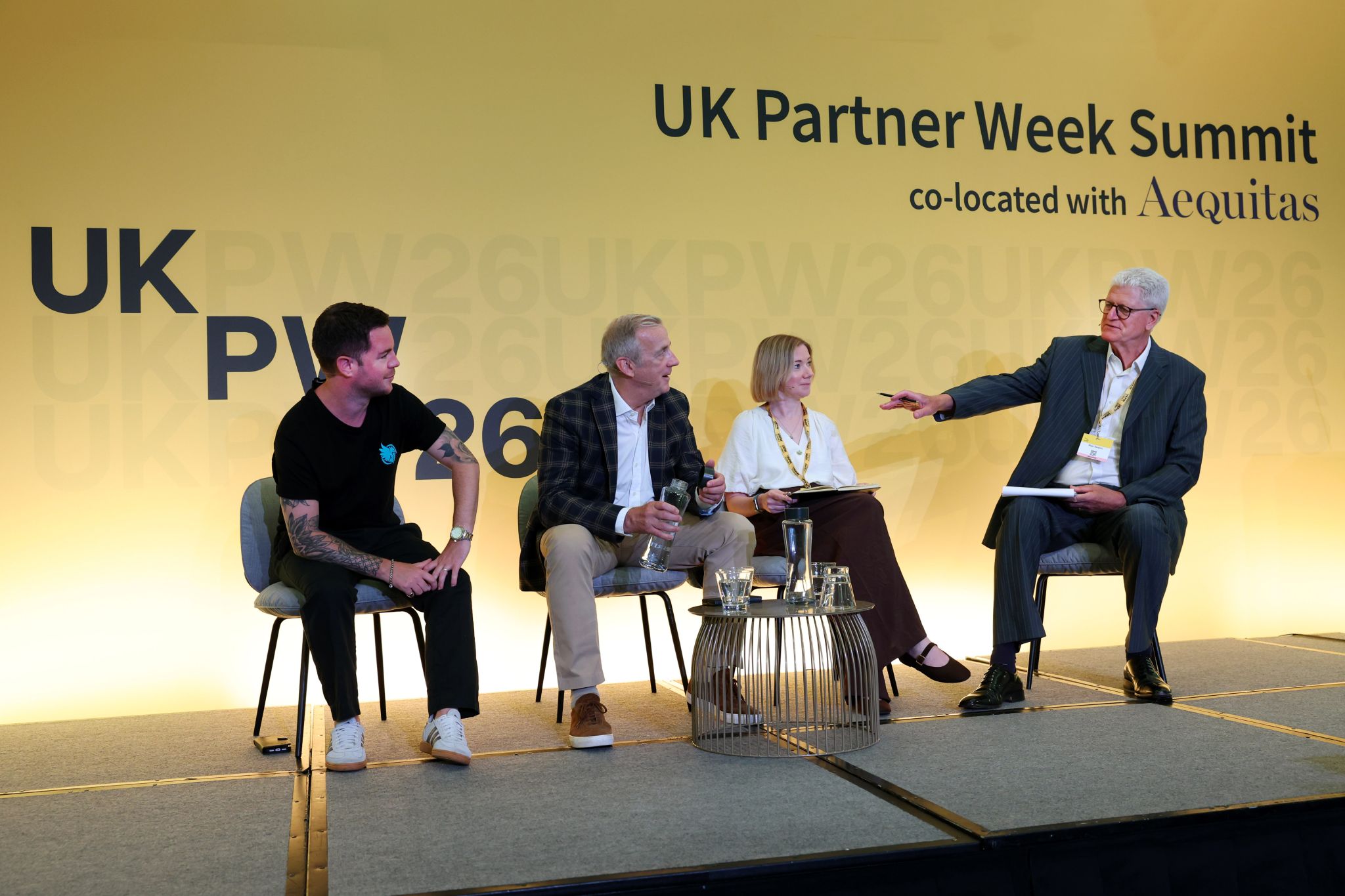



Being invited to join a panel at the UK Partner Week Summit 2026 wasn’t simply an opportunity to represent Vizst Technology. It was an opportunity to contribute to a much bigger conversation about how organisations attract, develop and retain great people in a workplace that’s changing faster than ever before.
Held at Convene, 133 Houndsditch, the UK Partner Week Summit brings together channel leaders from across the UK to share ideas, challenge thinking and explore the future of our industry. Across themes including Sales Excellence, Marketing Impact, Technology Innovation, Future Leaders and Sector Diversity, one subject repeatedly came back into focus: people.
Representing Vizst on the main stage, our Head of HR, Evonne Pemberton, joined fellow industry leaders to discuss what meaningful career development looks like today and why organisations need to rethink traditional approaches if they want their people to thrive.
It’s a topic that couldn’t be more relevant.
Shortly before the event, Vizst was recognised as one of the UK’s Best Workplaces for Wellbeing™ 2026, reflecting the people-first culture we’ve worked hard to build. While awards are always appreciated, they matter because they represent something much bigger: creating an environment where people feel supported, challenged and able to grow throughout their careers.
Reflecting on the discussion, Evonne highlighted five themes she believes every organisation should be thinking about.
1. Career progression is becoming more like a climbing wall than a ladder
For decades, career development was viewed as a series of promotions. One role led neatly to the next.
Today’s careers rarely follow that pattern.
Instead, progression increasingly comes from lateral moves, project work, new experiences and continuous learning. Building a broader range of skills often creates stronger leaders than simply moving upwards through job titles.
The organisations that recognise this shift are giving people more opportunities to explore, contribute and develop in different ways.
2. Development should be a conversation, not an annual event
Many organisations still rely heavily on annual appraisals to discuss career development.
The problem is that growth doesn’t happen once a year.
Regular, meaningful conversations help people understand where they’re heading, identify new opportunities and adapt as priorities change. They also help managers better understand individual ambitions before people begin looking elsewhere.
Development works best when it becomes part of everyday leadership, not another HR process.
3. Some of the best development happens through experience
Qualifications and formal learning remain important, but they are only one part of professional development.
Some of the biggest leaps in confidence and capability happen when people are trusted with stretch projects, exposed to customers, asked to collaborate across departments or given responsibility outside their comfort zone.
Experiences like these build commercial awareness, communication skills, problem solving and confidence in ways that classroom learning simply can’t replicate.
4. Development doesn’t guarantee retention, but the absence of it almost guarantees attrition
People stay where they feel they are progressing.
While development alone won’t stop every resignation, organisations that fail to invest in their people often find retention becomes significantly harder.
Employees want to know they’re becoming more capable, more valuable and better prepared for whatever comes next. When those opportunities disappear, motivation often follows.
Investing in continuous development isn’t simply good for individuals. It’s good for business too.
5. AI will change work, but people will remain the differentiator
Artificial intelligence featured heavily throughout the summit, and rightly so.
But the organisations that succeed won’t necessarily be those with access to the newest AI tools.
The real advantage will come from people who know how to combine AI with human judgement, creativity, critical thinking and strong customer relationships.
Technology will continue to evolve. Helping employees understand how to use it effectively, confidently and responsibly may prove to be one of the most valuable investments organisations make over the next few years.
Looking beyond the panel
Events like UK Partner Week Summit create valuable opportunities to share experiences across the industry, but they also reinforce something we’ve always believed at Vizst.
Technology helps businesses move faster.
People determine how far they go.
We’re incredibly proud to see Evonne representing Vizst on the panel, helping shape important conversations about the future of work and championing the kind of people-first culture that continues to define our business.